I went to the bookstore for a self-help book

I went to the bookstore for a self-help book,
And all I found was poetry. Mary Oliver —
Have you heard of her? She’s not bad,
Though I don’t know what’s good anymore;
I’ve had too much education.

I’ve been considering Barth’s Dunyaziad
How Scheherazade writes herself
A story in which she can win,
How “the key to the treasure
Is the treasure.” There is no trick
To living, I think he meant to say —
But how should I know?
Perhaps Barth is indecipherable, like life
Or poetry.

I have been looking at my heroes,
At myself, at stories. Hard to romanticize
An unromantic life. The precedent
Is already set. My life cannot unfurl
Like a bulb or a white skirt —
It is not that kind of story.
I will not proceed quietly
To bed and to rise,
Will not count the stones of ancient rivers.
Nor will I burst like the setting sun
Or a horse’s quick, wet heart.

I went to the bookstore for a self-help book,
And walked home instead. Now I sit
Across the country,
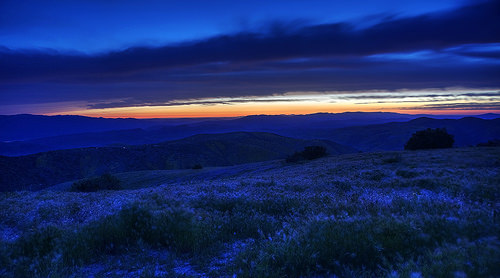
Outside my house, half-swallowed by the deep,
Royal blue of late twilight,
Orion’s belt dimmed by street lamps.
Glass on the street corner. Soft voices, warm lights,
In nearby windows. A child laughs,
A plate rattles. Something smells good
In the house next door.


featured photo credit: PeterThoeny Late dinner with a view via photopin (license)34274147386_a9a7dee71d.jpg

Fear the Octopus

Disclaimer: I actually quite like octopi. Will work on this further, at a later date.

Why fear the wolf?
Though he may wear the lamb’s clothes
He cannot take his shape,
Nor can he wear the starry sky
Like any common cape.
He feasts and fasts
And fasts and feasts
And always follows form
No need with wolves, my dear,
To fear unusual harm —
But the wise man fears the octopus,
Orphan of aliens, crawling wanderer,
Colorful carnivore, stealer of shapes.
Keen-eyed and clever, the octopus
Will answer any riddle you pose her,
Unriddle the riddler. The abyss looks in,
The octopus through.
And what riddle is she, this octopus.
A bird beaked and without wing —
Cast out curiosity,
Thief of sky’s colors?
Not bird then, but angel,
Scribe of the fallen. Was Veriel your name,
You whose ink once told
The truths of heaven?
Hungry, now, the octopus.
She wears the worlds she cannot return to,
Writes only the words
Of forgotten languages.
Covered in teeth
Her cursed and cloying fingers
Reek of hunger. She cannot help
But leave red marks.
A demon by definition,
Her nature is predicated
On the predatory act.
Paralyzed and vivified,
Her audience stands rapt
About to view her nature unchanging
(A demon in deed)
Whose soul’s her own trap.

untitled

We write dystopias
imagine ourselves
dark visionaries
We who warn
who see
in the seed
rot or
unfurling leaves

There is no such thing, of course
as a dark visionary
There is little power in
predicting gravity – more
in making the wind
on which feathers rise

We may hold a mirror to mankind
but any portrait, even the photograph
requires omission and thus admission
of light in dark, of
temporality
of the possibility
that the best really is
yet to come.

And The King Will Answer Them

Do you think they know?
These politicians, these security officers,
these men who rip off women’s veils.
Do you think they know
they are not Christians?

But surely I should not
speak of such things;
I am an atheist,
lover of witches, devils, and bastard gods —
chaos, surprises,
things out of season.
I could not revoke your religion
any more than you could revoke
my humanity.

But even Christ
had the good sense to disdain hypocrisy;
and I am not so generous a soul.
Listen, then.
Know yourself.

You who claim to walk in The Wiseman’s footsteps
only to block another’s path,
see what I see –
you who think yourself persecuted disciple,
are in fact a pharisee.
You are not the good Samaritan
but the priest who passed by,
not camel with breaking back
but one whom God will not let
enter needle’s eye.

And surely at heaven’s gate
St. Peter will repeat words you spoke:
your papers are no good.
Your visa’s been revoked.
Perhaps Christ himself will come,
look at you and look through
and turn to your St. Peter,
mouthing the word “who?”

(How could he know you?
You do not know yourself.)

But I am only an atheist.
I should not try to speak for Christ —
and neither, I think, should you.

Listen, instead –
Perhaps you will
know Him.


featured photo credit: Lawrence OP God’s Excessive Love via photopin (license)

The Elephant Woman

​Come, behold the Elephant Woman

Who hatched from a mother dove’s egg.
She is loud and tall and
See how she tramples the world underfoot
Great are the feet and wide
Of she, the Elephant Woman

Wanderer long-minded, she remembers
What you have forgotten
The ancient waterholes,
The graveyards luminous in the desert’s night
She has tales to tell,
She the Elephant Woman.

Gentle, sometimes, the Elephant Woman –
She lowers her trunk to tickle children,
Holds them in her arms.
But should someone raise a hand against them,
She would rise, Goddess of Destruction,
Grow new arms, a second head,
Dance drunken on their burning cities,
Rend bridges with her tusks.

She, the Elephant Woman,
Who came from a mother dove’s egg.

damage report, 1/2017

Meant to write Presidential but it came out Pestilential. Dang. – Margaret Atwood

The world disintegrating
Seems to contain only
Perishable pleasures

And sure, we have each other
The final bulwark against
The rising of the hydra’s heads

The beast slouching
– A more belated birth, perhaps,
Than expected –

But every usual escape
From daily cares
Has taken on a monstrous form

The shadows of stories
My sustenance in such times
Wax in warning of the nearing night

And heroes hang their heads
Escaping others’ nooses
And I I I

Am drowning in Necessity
Watch: two heads bloom
For each one severed

One thing that can be said
For the fight against injustice:
No matter how bad the market,

There’s always work to do.

The Lemondrop Inn

sigrid nunez writes

“some things it would be death to forgive”


hansel and gretel’s witch

— evil, as expected —

but how to blame her,

when famine has swept the land,

divided heart and head,

body and soul,

families.

has not their own father

left them to die?

(the authors, men of course,

will blame the step-mother.)


one of many differences

between witch and hero:

the hero forgives

forgetting,

but witches want too much.

(perhaps this

is what makes them witches)

would a witch leave her child

for any man?

witches lock little girls in towers,

just to keep them.

they will not part

with a single bean.


riding home with my father,

ten years old, tactless,

delicately soled. I have

upset him—not difficult

to do. (seratonin is not

a playground word.)

“they run over dogs

all the time in burma,”

he tells me, and I know

he has said it only

to hurt me.


if my father left me

in the woods

I would not come back.


many years would pass.

until he found me

on his third honeymoon,

innkeep, at a candied house,

(rebranded, of course —

no hint of uncanny cannibals,

in The Lemondrop Inn.)


perhaps he apologizes perhaps he

smiles the smile he saves for strangers,

asks my name.

(teeth, the most misleading

of bones,

elusive, illusive,

not white stones but breadcrumbs,

not swan but snow-white bird.)


supercilious, collected,

I give him his roomkey

and change.

My Brain Needs Spring Cleaning

I’ve cleaned all the floors,   

I’ve cleaned out my purse,   

I cleaned out the bathroom,  

but there’s one place way worse.  


My brain needs spring cleaning.  

It’s crammed full of facts.   

Are some true, I wonder,  

Or the whole lot just trash?


Something to ponder,   

as you’re lying in bed.  

Is theory more useful  

or a hole in your head?  


Wrappers in my wrinkles,  

cobwebbed synapses.   

My thoughts move slower   

than frozen molasses.  


I’m stuffed, soft and stale,   

I’ve the Rust Belt’s red rust,  

tip me over to find  

the desert’s own dust.    


In spring I’ll start sweeping,  

Cortexes, lobes galore,  

I’ll sweep from noon to night,  

then sweep a little more.  


I’ll invite back old friends,   

Fancy and Delight,    

call Curiosity,  

meet Beauty for a bite.  


We’ll spend a night dancing  

tell the tallest of tales.   

Each one, oil for lamplight.  

Each one, wind for the sails.  

the shard of glass

glass like a fish bone

pierces my foot

thin, long, choking-sharp.

I twist up recalcitrant ankles,

make eyes of my fingertips,

and the shard becomes a glittering tear

on – not in – my right thumb.

thank god, I think,

for little things.

for the thick soles of my feet

(why did I ever buff them down?)

and my hard, hard head.

would you like some cream with that dark surrealism, or THE REVOLUTION’S MONSTER

People like to say that you can hurt a person’s body, but not their soul, though you and I know it isn’t true.

For when the king’s army came, they took the singers’ first, and cut out their tongues, and threw them in the river; and where were their souls then, if not swimming like fish in the waters.

And they took the players’ various masks, the writers’ index fingers and thumbs, my husband’s hands. They stole the eyes of newsmen and professors, pulled the lawyers’ canines, stripped the confessors of their ears after shaking them for loose change secrets.

Little of the teachers survived—a open hand, here, a still-beating heart, there. Where the faces, where the tongues, where the ears, where the—  

They emptied out the students and the children.

In the river they all went, and since there were no eyes, no tongues, no ears, certainly the soldiers couldn’t have known better, nobody left to warn them, the books that could have told them stacked and burned months before the Grand Mutilation.

It didn’t happen instantly, mind you. It was years before the heads found their way to the necks, before the shoulders began to remember themselves. Frankenstein’s monster, creating himself? Certainly he had all the best to work with.

A beautiful nightmare, the thing that loped from the river. A theatre mask for a face, a voice like honey, the confessors’ ears. He remembered every word he heard, and some you’d heard besides—perhaps he’d found the students’ brains. Was that Orpheus’ head it wore?

I invited it into my house, and fed it everything I had—too polite to admit it was still hungry, strange thing, but a cook knows. The soldiers watched from outside, smiling uncomfortably, like sick dogs. But it asked them in and spoke to them and flattered them decently, and so they left to bring their superiors.

“You know you won’t get far, with a face like that,” I told it, glancing outside. It dabbed its mouth with its napkin. The blacksmith’s hands, whiteblue, hard as river stones, glanced over mine, settled a single moment, and I wondered whose heart he—it—had taken.

Soon it appeared in all the papers. Creation of the Republic! The End of Death! The best of everything in one, it said—a triumph of science and discovery.

No one seemed to mind when it took the general’s face, and one day the king came to meet the creature, so splendidly it spoke and put on. I spread the picnic for them myself upon the riverbank, kept my face away from the cameras. The creature allowed itself to be made over, the blacksmiths’ hands curled stiffly behind its back. Something feminine, tentative about the way it moved, a curious bend to its back whenever it thought you weren’t looking, as though used to long years of stooping. How long it must have slept, hibernating, waiting for richer harvests.

The king said that of course it would have to come to the capital and be shown around; the creature’s eyes fixed rigidly, perhaps remorsefully, on the river. Is that what it woke up for, after a thousand years? Perhaps it had forgotten to acquire a spine, while plumbing the river’s depths for human pieces. Perhaps there were not many to be found.

There was only dessert left, and I gritted my teeth as I prepared it. Of course the soldiers hadn’t bothered to take anything from me; of course I saw none of myself in the monster. But why should that offend me?

The monster only ate meat, and so of course he did not eat the dessert. He watches, curiously impassive, as the king began to falter, the slow lean forward, the suddenly unblinking eyes. He turned to me. I missed his theatre-mask face, hated the chill of his hands in mine even as I squeezed them tighter.

“Where do you think he keeps his soul?” I asked quietly, attempting a smile. Steel against my temple. I knew I would be mutilated, now that I was no longer harmless, and I found myself forgiving while I still could. Could I borrow the confessors’ ears, if only for a moment?

What, I wonder, will they take from me?

“Stomach, of course,” said the monster, answering a question I had forgotten asking. He looked up at the soldier beside me, his expression merely curious. Then he took the king’s crown up, gently moved the soldier’s gun away from my head, and walked forward toward the cameras. He no longer loped, but moved slowly, regally. I collapsed forward, weak with anxiety, and my eyes began to close. I could see the cameras, the screens, as he approached them.

He gave them a smile—the one I had greeted him with, each day he had come home to the inn, insincere in everything except its hope—and in not one but many voices, he began to speak.